No products in the cart.

Frans Vercoutere
Mijn Wijdse Wereld / My Wide World
Saturday 22/11/2025 — Sunday 28/12/2025
Opening Sunday 23/11/2025 at 16.00
Introduction: Mieke Mels, curator at Mu.Zee



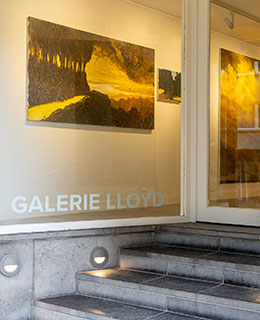
From November 22 until December 28, Frans Vercoutere exhibits for the second time at Galerie Lloyd in Ostend, right across Ensor Museum.
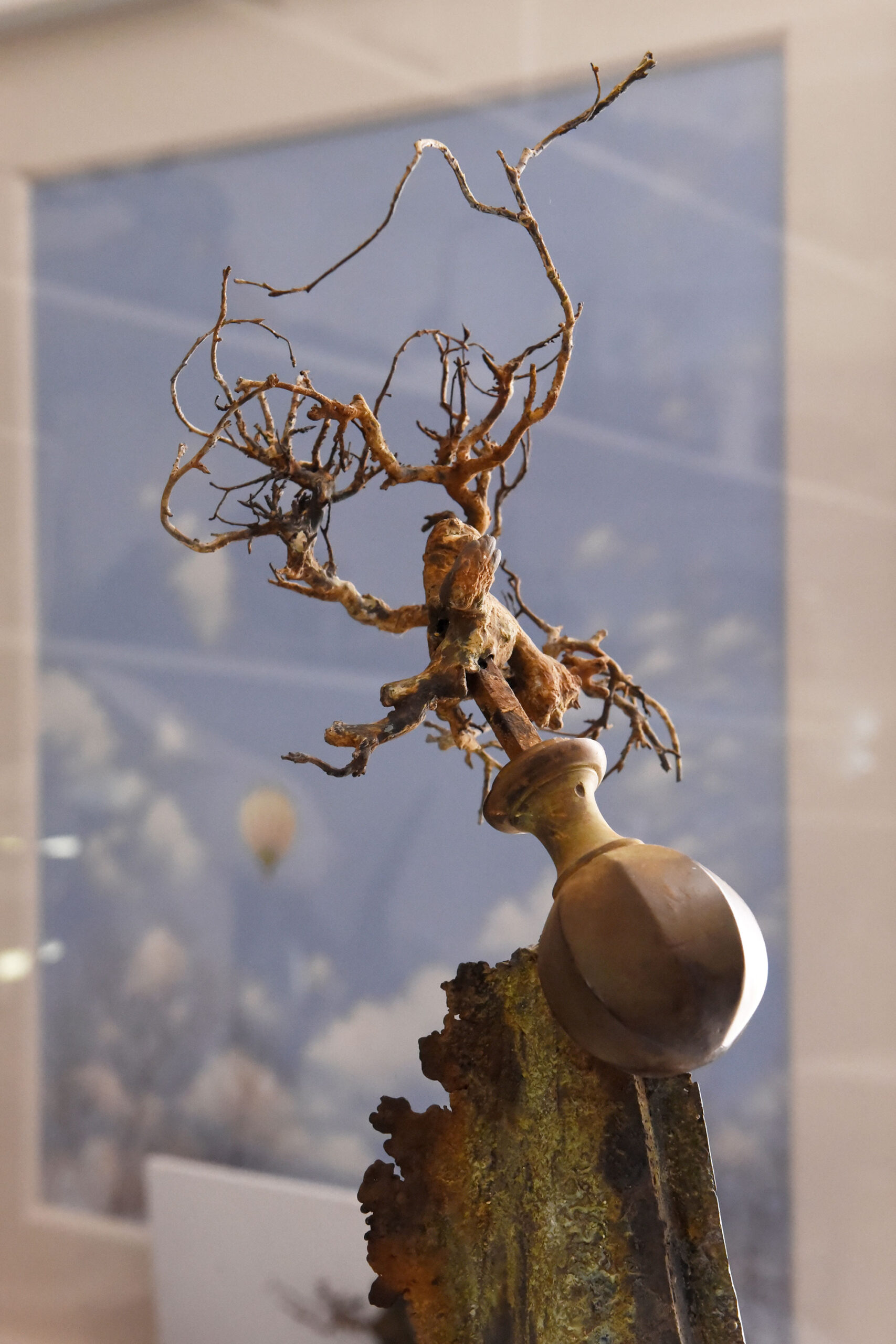
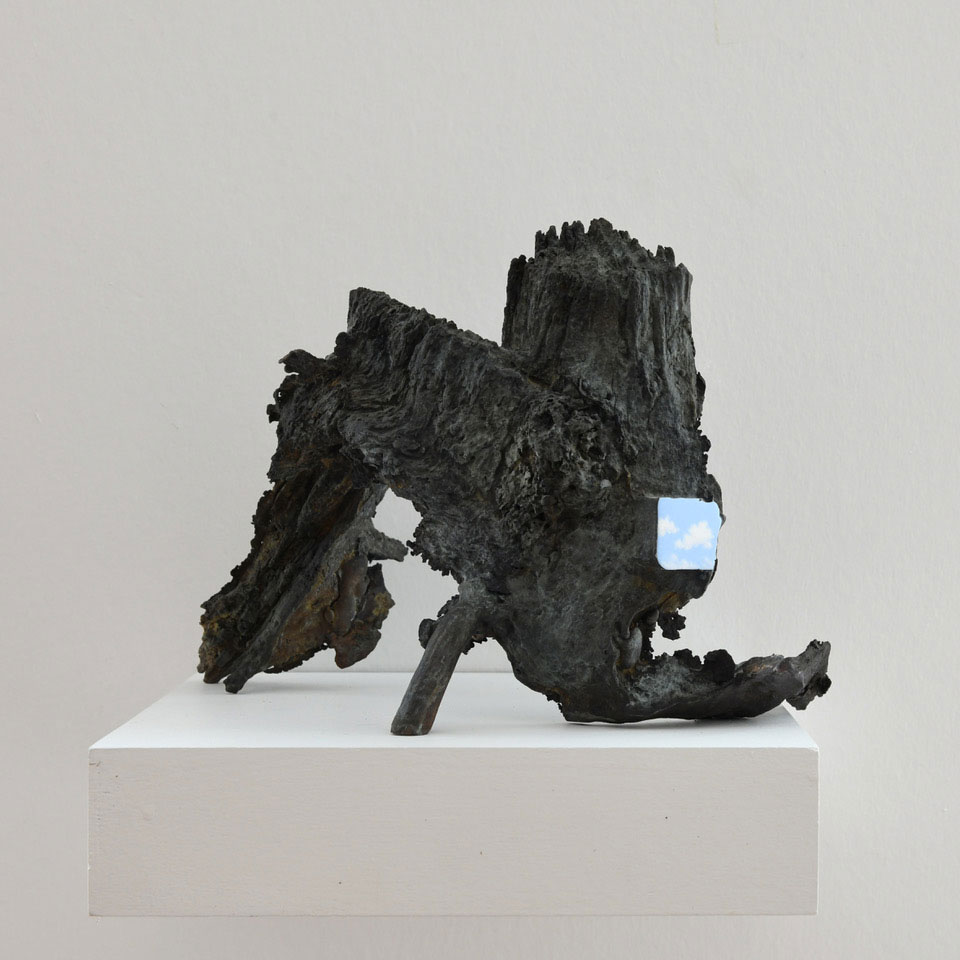
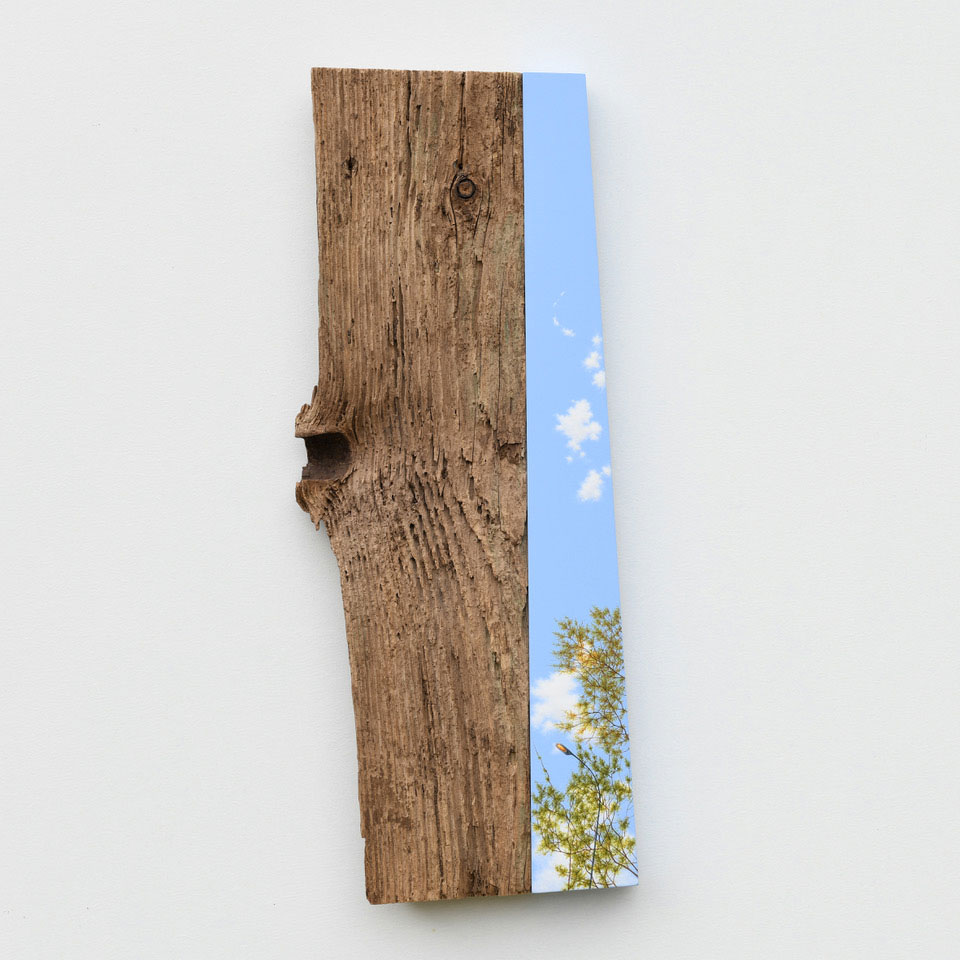
The exhibition ‘Mijn Wijdse Wereld’ comprises a selection of recent sculptures and paintings. Crafted in various materials – bronze, stone, wood – the sculptures present the characteristic contrast of Frans Vercoutere's three-dimensional work: a dialog between raw volumes and delicately polished surfaces, painted with blue skies and serene white clouds.
The variety of sculptures justifies the artist's chosen title: they form a vast world full of surprises. From a giant rabbit with blue antlers to a stone, from randomly found pieces of wood to delicate roots cast in bronze, from a fragment of translucent quartz to a blue helmet ridden by a green horse – Frans Vercoutere’s world seems endless. And no matter what he touches, he has the ability to turn it into a work of art that is instantly recognisable as his own.
The paintings are small panels depicting delicate landscapes, in a style reminding of Peter Bruegel the Elder. Once again, Frans Vercoutere creates his own unmistakable world. Suave trees, branches and foliage – painted in minute detail – stand out against the same blue sky. The serene atmosphere is unique and yet it seems uncannily familiar: who hasn’t at least once contemplated the treetops projected on a sky delicately patched by innocent clouds? A feeling of nostalgia seeps in – a longing for a perfect world.
In this sense, Frans Vercoutere is not only an artist, but a real creator: the creator of a wide world.
Daniela Chirion
—
Clouds and skies have played a special role in Frans Vercoutere's oeuvre since the 1970s. Flocks of fluffy, white, sheepish clouds constantly repopulate the immaculate, light-blue sky of his landscape paintings. There's never a hint of bad weather. There never seems to be a cloud in the sky. But art wouldn't be art without its apparent innocence. With this idealized, clouded sky so typical of him, Vercoutere created a tool to place his painted world outside of time, to situate it, in other words, in a timeless vacuum. Beneath the surface of his seemingly idyllic landscapes and comical assemblages, philosophical messages and ideas from and for all times lie hidden.
Annelies Vantyghem
—
[...] The find, or in French, much more beautifully: la trouvaille... The magic of something you don't need, don't even strive for, but which presents itself unannounced at your feet; something simply waiting there for you, because no one else noticed it before or thought it worth looking at. And what you can do with finds. “As beautiful as the chance encounter of an umbrella and a sewing machine on a dissecting table”, wrote Lautréamont, probably after one too many opium pipes or one too many glasses of absinthe. He thus laid the foundation for the artistic interest in the ‘objet trouvé’, the find. More than that: he initiated the rather coincidental combination of objects that would permeate Surrealism and later, after Pop Art, all of modern and contemporary art. Just as it happened with words in poetry, things would now also free themselves from their function.
Finds... Frans built a shelter for them at the end of his plot. His studio resembles a beachcomber's hut, except that it's not the North Sea, but the Meulebeek ring road that roars past, marking the edge of his domain. There's no preconceived logic to a collector's drive. There's only the urge to take care of abandoned matter; things that are not consumable, or for which there's serious doubt whether they'll ever yield more than the effort required to pick them up and store them. For someone like Frans, clearly different criteria apply: the poetic beauty of those material orphans, or the potential for wonder as they spark associations. A table in the middle of the studio is provided for this purpose, a simple surface in a busy environment. A bit of an altar, perhaps, or that Lautréamont cutting table, if you will… Where things meet, more or less forced by the hand and the imagination. Or where things are translated into another form; cast, duplicated in bronze, preserved under a globe, and given a careful coat of paint. Discoveries often react like chemical elements; individually, they are tranquil and seemingly worthless. But brought together in the right doses, they suddenly crackle and unleash unprecedented energy. In chemistry, yields like heat or electricity are pursued. An artist generates another, untradable and intangible commodity: meaning. [...]
The mariage of forms that Frans presents is playful, intuitive, but as a method, above all, aimed at a subtle, figurative artistry. [...]
Frederik Van Laere
Van 22 november tot en met 28 december exposeert Frans Vercoutere voor de tweede keer in Galerie Lloyd in Oostende, recht tegenover het Ensormuseum.
De tentoonstelling ‘Mijn Wijdse Wereld’ omvat een selectie recente sculpturen en schilderijen. De sculpturen zijn vervaardigd in verschillende materialen – brons, steen, hout – en vormen het karakteristieke contrast van Frans Vercouteres driedimensionale werk: een dialoog tussen ruwe volumes en delicaat gepolijste oppervlakken, beschilderd met blauwe luchten en serene witte wolken.
De verscheidenheid aan sculpturen rechtvaardigt de gekozen titel van de kunstenaar: ze vormen een enorme wereld vol verrassingen. Van een gigantisch konijn met een blauw gewei tot een steen, van willekeurig gevonden stukjes hout tot delicate wortels gegoten in brons, van een fragment doorschijnend kwarts tot een blauwe helm bereden door een groen paard – Frans Vercouteres wereld lijkt eindeloos. En wat hij ook aanraakt, hij weet er een kunstwerk van te maken dat direct herkenbaar is als het zijne.
De schilderijen zijn kleine paneeltjes met delicate landschappen, in een stijl die doet denken aan Pieter Bruegel de Oude. Opnieuw creëert Frans Vercoutere zijn eigen, onmiskenbare wereld. Zachte bomen, takken en gebladerte – tot in het kleinste detail geschilderd – steken af tegen diezelfde blauwe lucht. De serene sfeer is uniek en toch voelt ze ongewoon vertrouwd aan: wie heeft er niet minstens één keer naar de boomtoppen gekeken, geprojecteerd op een hemel die subtiel bezaaid is met onschuldige wolken? Een gevoel van nostalgie sluipt erin – een verlangen naar een perfecte wereld.
In die zin is Frans Vercoutere niet alleen een kunstenaar, maar een echte schepper: de schepper van een wijdse wereld.
Daniela Chirion
—
Wolken en luchtpartijen spelen al sinds de jaren ’70 een bijzondere rol in het oeuvre van Frans Vercoutere. Kuddes wollige, witte schapenwolkjes bevolken altijd opnieuw de smetteloos lichtblauwe hemel van zijn landschapsschilderijen. Nooit valt er enige dreiging van slecht weer te bespeuren. Nooit lijkt er een vuiltje aan de lucht. Maar kunst zou geen kunst zijn, zonder slechts schijnbaar onschuldig te zijn. Vercoutere creëerde met deze voor hem typische ideale wolkenhemel een instrument om zijn geschilderde wereld buiten de tijd te plaatsen, om ze met andere woorden in een tijdloos vacuüm te situeren. Onder de huid van zijn op het eerste zicht idyllische landschapjes en komische assemblages, schuilen dan ook filosofische boodschappen en ideeën van en voor alle tijden.
Annelies Vantyghem
—
[...] De vondst, of in het Frans, veel mooier: la trouvaille... De magie van iets wat je niet nodig hebt, zelfs niet nagestreefd, maar dat zich onaangekondigd voor je voeten aandient; iets wat gewoon daar op je lag te wachten, omdat niemand anders het eerder opmerkte of de moeite waard vond om er naar om te kijken. En wat je met vondsten zoal kan doen. “Zo mooi als de toevallige ontmoeting van een paraplu en een naaimachine op de snijtafel”, schreef Lautréamont, waarschijnlijk na een opiumpijpje of een glas absint te veel. Hij legde daarmee de basis van de artistieke interesse in het ‘objet trouvé’, de vondst. Meer nog: hij gaf de voorzet voor de eerder toevallige combinatie van voorwerpen, die het Surrealisme, en later, na Pop-art, de hele moderne en hedendaagse kunst zou doordesemen. Zoals het in de poëzie met woorden gebeurde, zouden de dingen zich nu ook loszingen van hun functie.
Vondsten... Frans heeft er op het eind van zijn perceel een onderkomen voor gebouwd. Zijn atelier lijkt op de hut van een strandjutter, met dien verstande dat niet de Noordzee, maar de Meulebeekse ringweg er buldert en de rand van zijn domein markeert. Er zit geen vooropgezette logica in de drift van een verzamelaar. Er is enkel de drang om zich te ontfermen over achtergelaten materie; dingen die niet consumeerbaar zijn, of waar ernstige twijfel over bestaat of ze ooit meer gaan opbrengen dan de moeite die het kost om ze op te rapen en te stockeren. Voor iemand als Frans gelden duidelijk andere criteria: de poëtische schoonheid van die materiële weeskinderen of het potentieel aan verwondering als ze onderling associaties in gang zetten. Midden in het atelier is daarvoor een tafel voorzien, een sober oppervlak in een drukke omgeving. Beetje altaar toch, of die snijtafel van Lautréamont, zo je wil... Daar waar de dingen elkaar vinden, in mindere of meerdere mate geforceerd door de hand en de verbeelding. Of daar waar de dingen vertaald worden in een andere gedaante; afgegoten, gedupliceerd in brons, bewaard onder een globe en voorzien van een zorgzame lik verf. Trouvailles reageren dikwijls zoals chemische elementen; afzonderlijk zijn ze kalm en schijnbaar waardeloos. Maar als je ze in juiste dosissen samenbrengt, knettert het ineens en veroorzaken ze ongeziene energie. In de chemie worden rendementen als warmte of elektriciteit nagejaagd. Een kunstenaar genereert een ander, onverhandelbaar en ongrijpbaar goed: betekenis. [...]
De mariage van vormen die Frans presenteert is speels, intuïtief, maar als methode bovenal gericht op een fijnzinnig, figuratief ingesteld kunstenaarschap. [...]
Frederik Van Laere