No products in the cart.
International Photo Biennial Ostend 2025
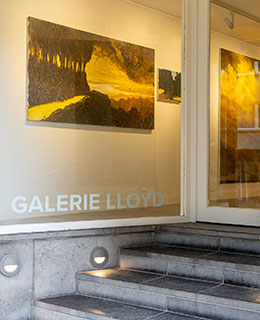
Galerie Lloyd and the International Photo Biennial Ostend 2025 present:
Teodora Cosman (BE), Răzvan Neagoe (RO), Daniela Chirion (BE)
Guest artist: Dragoș Neagoe (RO)
Saturday 06/09/2025 — Sunday 16/11/2025
Sunday 14/09/2025 at 16.00:
Festive opening of the gallery exhibition and presentation of the artists


We are glad to announce our participation in the third edition of the International Photo Biennial Ostend.
This year the Biennial brings together the work of more than 30 national and international photographers at 20 locations in the city.
Our artists:
TEODORA COSMAN
Teodora Cosman (BE) graduated from the Art University in Cluj-Napoca, and currently she’s a PhD student at the University Libre de Bruxelles and the Academie Royale de Beaux-arts in Brussels, with a thesis on photographic overexposure. She works in different mediums ranging from painting, silkscreen and other printing techniques, to photography, video and installation. She is a recipient of the ‘Coups de Coeur’ prize of the Parcours d’artistes de Saint-Gilles (2023). She is the founder of the gallery Espace Intermédiaire in Brussels, where she lives and works.
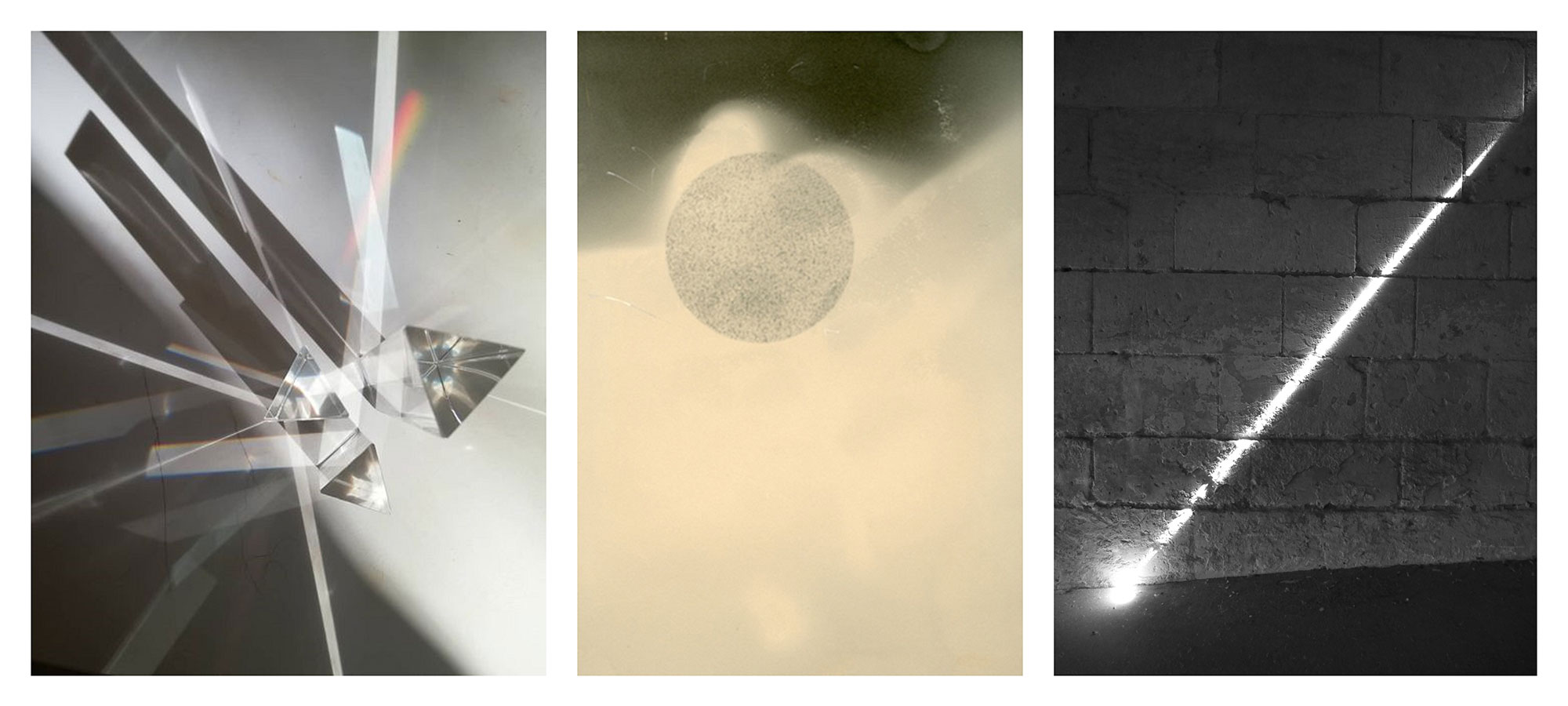
Teodora Cosman’s work consists in the attentive observation of her immediate environment, where the act of looking precedes and even becomes self-sufficient to any artistic gesture. Fascinated with light, she aims to recreate, through her photographs, videos and installations, the moments of epiphany when natural light interacts with objects creating what she calls ‘light sculptures’ and ‘light studies’. Drawing on the belief in the referential function of photography she creates abstract landscapes and architectures, subtly conducting the imagination of the viewer towards realities that are not present in the photograph. As, for example, ‘Landscape by the North Sea’, is a fridge door from a night shop, with traces of condensation, while ‘Fountain’, represents an enlarged egg in a glass jar. Using the humblest means, generally the camera of a mobile phone, she transforms the most familiar objects into larger narratives, often in reference to classical representations, such as the ‘Vanitas’ studies, where the still life genre and the transparency of glass are used to create light effects. She often associates different mediums, using natural or filmed light projections in order to reenact the situations encountered in natural conditions.
RĂZVAN NEAGOE
Răzvan Neagoe (RO) lives and works in Bucharest, România. In 2002, he obtained a BA in Painting from the National University of Arts in Bucharest and subsequently a MA in Visual Arts from the same university. Razvan explores experimental analog photography, with a clear interest in the aesthetics of traditional techniques: he uses expired photographic paper, old cameras and rudimentary technologies, treated as creative tools, not just as means of capturing the image. His works have been presented in both solo and group exhibitions and fairs, including Unseen Amsterdam and those with Alina Tudor (focAR group), Urban Jealousy – the first International Traveling Biennial in Tehran, the 5th Bucharest Biennial, the Lyon Biennial of Contemporary Art.
“The image is reclaimed as a witness that records photographic errors and alterations. Consequently, it is removed from the realm of the recognisable, and the image is brought into a meditative and experimental territory of analytical and self-reflective origin. In his approach, the rudiments of analog photography, augmented with various experimental curiosities, are the primary creative tools through which the image undergoes psychological, existential, and phenomenological questioning. In this sense, Răzvan Neagoe's artistic endeavour can also be understood as a form of researching the problems of the ‘meta-image’, a term borrowed from W.J.T. Mitchell, meaning an ‘image of the image’, leading a self-aware inquiry into the existence of images, a specific condition of the ‘iconic turn’.” (part of the curatorial text of the Sinegrafia exhibition, curator Silviu Padurariu – source: arsmonitor.ro)
Răzvan Neagoe – The Time Project – “Photography is and means light. Time dictates light. It makes it warm, cold or harsh depending on the time of year, the weather or the place from which you look at it. In addition to the visual part of light, there is also the part of the emotional state with which you look at light. You can be happy or sad, you can be bored or ecstatic even if the light is the same, I look at it differently in a different period of time depending on my mood. But light seen through the prism of time does not just mean contemplation. You try to touch it, to be able to play with it. But if light changes its visual discourse, only time is to blame. Light seen through the prism of time does not just mean photographing it, but also identifying with it, but especially with time. This is how I justify the action of making contact with different ‘apertures’ and playing with seconds. Pressing within an allotted time makes the light imprint a certain state of mine on the photographic paper.” Some of the resulting and present works took place within the residency ‘A mechanical copy + Răzvan Neagoe’ at the 2/3 Gallery, Bucharest.
Another example of the approach of the ‘Time’ project was exhibited in the personal exhibition called ‘Sinegrafia’ at the Ars Monitor Gallery. The action is carried out only at home, through a gesture carried out for 200 days. “Every day I woke up at a certain time (always the same) and performed the artistic act. The exposure time by contact was 8 seconds. The cause of my state of mind and the pressure was not always firm. The time spent by the paper in the developer was part of the disposition that I dedicated to the appearance of the image. Therefore, the ‘Time’ project is about me as a person and about my feelings for 200 consecutive days.” (Răzvan Neagoe)
DANIELA CHIRION
Daniela Chirion (BE) studied painting at The National University of Arts, Bucharest, graduating in 2002. In 2006 she received her Master in Visual Arts degree from the same University. Her creation comprises painting, graphics, artist’s books, video art, object, poetry and photography, with works included in the European Parliament Collection and in other public or private European collections. She lives and works in Belgium.
“Through various contemporary mediums, Chirion investigates humanity’s quiet thoughts. Be it painting, drawing, photography or video art, her art exudes ephemeral human intimacy. Each series has a distinctive colour palette, the tones and hues of which underline the depicted theme. In her White Shades series, for example, the artist varies notes of grey to convey the texture of bed and pillow sheets, capturing their latent heat, as if someone had just left the scene, their absence perceptible.
Poetry, present indirectly in all of Chirion’s work, is another avenue of expression for the artist. In her poems, she conveys the restless movement of her inner world, questions the human condition as a whole, and more generally seeks meaning through the mundane, the normal, the every day – a subject which has taken precedence in her corpus since 2008.
Chirion’s works of art are displayed at various cultural and political institutions around the world.“
© Contemporary art collection, European Parliament – Daniela Chirion (https://art-collection.europarl.europa.eu/en/artists/daniela-chirion/)
Daniela Chirion looks at photography with the eye of a painter and paints with the eye of a photographer. In her oeuvre, the two mediums intertwine and mutually influence each other. When looking through a lens, the artist is sensitive to atmospheric images rendered in black and white. The black and white photography has inspired several series of paintings in which colour is absent, emphasizing the clarity of the composition, the textures, the vibration of the brushwork. In photography, as in painting, Chirion's main subject is light or the absence of it. The meeting of the two reveals what is represented, the rest being dissolved by light or engulfed by shadow. The two mediums are also complementary – while her canvases are the result of a laborious process, her photographic work is spontaneous; and while she prefers to paint in her studio, most of her photographs are taken outdoors; her gaze captures beams of light, the bright edge of a cloud, circles of confusion, reflections on wet sand, landscapes wrapped in fog, endless beaches – glimpses of elements and phenomena that exist perpetually, but that never look the same twice. The photographic images become discreet odes to the fragility of beauty, meditations, memories of a present that continually turns into past.
Guest artist: DRAGOȘ NEAGOE
Dragoș Neagoe (RO) studied sculpture at The National University of Arts, Bucharest. His professor was Vasile Gorduz, one of the most famous figurative sculptors in Romania. After graduating in 2002, he continued studying with the same professor, obtaining his Master diploma in 2004. Dragoș Neagoe’s sculpture is oriented towards a figurative style influenced by tradition – the classics of the Renaissance and Baroque. The concepts focus on the conflicting emotional states of people, on physical strength in contrast to psychological weakness or the bipolarity of emotions experienced in an action. For over 20 years, he has been passionate about bronze casting. He installed a small foundry next to his studio where he casts his own works. He uses bronze, resin, terracotta, and plaster. He has been commissioned several public monuments, the most notable being St. George from Vânătorii Mari and the Victoria Monument from Ciorăști, Bacău county. He has works in private collections throughout Europe and the U.S. His works are being presented by Artmark and Vikart auction houses.
“In each sculpture, I seek to capture a piece of the soul of movement, to bring to life the unseen dance of energies that run through the human soul. Inspired by the eternal spirit of the masters Rodin and Michelangelo, I transform bronze into silent poetry, in the echo of a moment suspended between real and imaginary. Each form is a breath of time, a prayer of matter that vibrates between strength and fragility, between turmoil and peace. Muscles – tense and relaxed alike – become a map of emotions that cannot be spoken, but can be felt deep in the heart. The face sculpted with passion carries the story of a silent struggle, of a fearless hope, of a dream that refuses to die. For me, sculpture is more than a form, it is a language of the spirit, a meditation on the human condition, a bridge between past and future, between concrete and mystery. Through my works, I invite the viewer to penetrate beyond appearances, to feel the pulse of life and to find themselves in the universality of emotion, in a silent dialogue that transcends time and space.”
We zijn verheugd onze deelname aan de derde editie van de Internationale Fotobiënnale Oostende aan te kondigen.
Dit jaar brengt de Biënnale het werk van meer dan 30 nationale en internationale fotografen samen op 20 locaties in de stad.
Onze kunstenaars:
TEODORA COSMAN
Teodora Cosman (BE) studeerde af aan de Kunstuniversiteit in Cluj-Napoca en is momenteel doctoraatsstudent aan de Université Libre de Bruxelles en de Koninklijke Academie voor Schone Kunsten in Brussel, met een proefschrift over fotografische overbelichting. Ze werkt met verschillende media, variërend van schilderkunst, zeefdruk en andere druktechnieken tot fotografie, video en installatiekunst. Ze ontving de ‘Coups de Coeur’-prijs van het Parcours d’artistes de Saint-Gilles (2023). Ze is oprichter van de galerie Espace Intermédiaire in Brussel, waar ze woont en werkt.
Het werk van Teodora Cosman bestaat uit de aandachtige observatie van haar directe omgeving, waarbij het kijken voorafgaat aan en zelfs volstaat als artistiek gebaar. Gefascineerd door licht, probeert ze via haar foto’s, video’s en installaties de momenten van openbaring te hercreëren waarop natuurlijk licht in interactie treedt met objecten, en zo wat zij ‘lichtsculpturen’ en ‘lichtstudies’ noemt tot stand brengt. Vertrekkend vanuit het geloof in de referentiële functie van fotografie, creëert ze abstracte landschappen en architecturen die de verbeelding van de toeschouwer subtiel richting realiteiten sturen die niet op de foto zelf aanwezig zijn. Zo is bijvoorbeeld ‘Landscape by the North Sea’ eigenlijk een koelkastdeur uit een nachtwinkel, met sporen van condensatie, terwijl ‘Fountain’ een uitvergroot ei in een glazen pot voorstelt. Met de eenvoudigste middelen meestal de camera van een mobiele telefoon transformeert ze alledaagse objecten tot grotere narratieven, vaak met verwijzingen naar klassieke voorstellingen, zoals in de ‘Vanitas’-studies, waarin het genre van het stilleven en de transparantie van glas worden ingezet om lichteffecten te creëren. Ze combineert regelmatig verschillende media, waarbij ze gebruikmaakt van natuurlijke of gefilmde lichtprojecties om situaties opnieuw na te bootsen die ze onder natuurlijke omstandigheden heeft waargenomen.
RĂZVAN NEAGOE
Răzvan Neagoe (RO) woont en werkt in Boekarest, Roemenië. In 2002 behaalde hij een bachelor in Schilderkunst aan de Nationale Universiteit voor de Kunsten in Boekarest, gevolgd door een master in Beeldende Kunst aan dezelfde universiteit. Răzvan verkent experimentele analoge fotografie, met een uitgesproken interesse in de esthetiek van traditionele technieken: hij maakt gebruik van verlopen fotopapier, oude camera’s en rudimentaire technologieën, die hij benadert als creatieve instrumenten in plaats van louter middelen om beelden vast te leggen. Zijn werk werd gepresenteerd in zowel solo- als groepstentoonstellingen en beurzen, waaronder Unseen Amsterdam, samenwerkingen met Alina Tudor (focAR-groep), Urban Jealousy – de eerste internationale reizende biënnale in Teheran, de 5de Biënnale van Boekarest, en de Biënnale voor Hedendaagse Kunst in Lyon.
“Het beeld wordt teruggewonnen als een getuige die fotografische fouten en veranderingen vastlegt. Bijgevolg wordt het verwijderd uit het domein van het herkenbare en wordt het beeld binnengebracht in een meditatief en experimenteel domein van analytische en zelfreflecterende oorsprong. In zijn benadering vormen de beginselen van analoge fotografie, aangevuld met diverse experimentele curiositeiten, de belangrijkste creatieve instrumenten waarmee het beeld psychologische, existentiële en fenomenologische bevraging ondergaat. In die zin kan het artistieke streven van Răzvan Neagoe ook begrepen worden als een vorm van onderzoek naar de problematiek van het ‘metabeeld’, een term ontleend aan W.J.T. Mitchell, die ‘beeld van het beeld’ betekent, leidend tot een zelfbewust onderzoek naar het bestaan van beelden, een specifieke conditie van de ‘iconische wending’.” (deel van de curatoriële tekst van de Sinegrafia-tentoonstelling, curator Silviu Padurariu – bron: arsmonitor.ro)
Răzvan Neagoe – The Time Project – “Fotografie is en betekent licht. Tijd dicteert licht. Het maakt het warm, koud of hard, afhankelijk van de tijd van het jaar, het weer of de plek van waaruit je ernaar kijkt. Naast het visuele aspect van licht, is er ook de emotionele toestand waarmee je naar licht kijkt. Je kunt blij of verdrietig zijn, je kunt je vervelen of extatisch voelen, zelfs als het licht hetzelfde is. Ik kijk er in een andere periode anders naar, afhankelijk van mijn stemming. Maar licht gezien door het prisma van de tijd betekent niet enkel contemplatie. Je probeert het aan te raken, om ermee te kunnen spelen. Maar als licht zijn visuele discours verandert, is alleen de tijd daarvoor verantwoordelijk. Licht gezien door het prisma van de tijd betekent niet alleen het fotograferen ervan, maar ook het identificeren ermee, maar vooral met de tijd. Zo rechtvaardig ik de handeling van het contact maken met verschillende ‘diafragma's’ en het spelen met seconden. Het indrukken van de knop binnen een afgemeten tijd zorgt ervoor dat het licht een bepaalde gemoedstoestand van mij afdrukt op het fotografisch papier.” Een aantal van de resulterende en huidige werken vond plaats tijdens de residentie ‘Een mechanische kopie + Răzvan Neagoe’ in Galerie 2/3 in Boekarest.
Een ander voorbeeld van de aanpak van het ‘Time’-project werd tentoongesteld in de solotentoonstelling ‘Sinegrafia’ in Galerie Ars Monitor. De handeling vindt uitsluitend thuis plaats, via een gebaar dat 200 dagen lang wordt uitgevoerd. “Elke dag werd ik op een bepaald tijdstip wakker (altijd hetzelfde) en voerde ik de artistieke handeling uit. De belichtingstijd bij contact was 8 seconden. De oorzaak van mijn gemoedstoestand en de druk waren niet altijd even sterk. De tijd die het papier in de ontwikkelaar doorbracht, maakte deel uit van de instelling die ik wijdde aan het verschijnen van het beeld. Daarom gaat het ‘Time’-project over mij als persoon en over mijn gevoelens, gedurende 200 opeenvolgende dagen.” (Răzvan Neagoe)
DANIELA CHIRION
Daniela Chirion (BE) studeerde schilderkunst aan de Nationale Kunstuniversiteit in Boekarest en studeerde af in 2002. In 2006 behaalde ze haar masterdiploma Beeldende Kunst aan dezelfde universiteit. Haar creaties omvatten schilderkunst, grafiek, kunstenaarsboeken, videokunst, objecten, poëzie en fotografie, met werken die deel uitmaken van de collectie van het Europees Parlement en andere openbare of particuliere Europese collecties. Ze woont en werkt in België.
”Via verschillende hedendaagse media onderzoekt Chirion de stille gedachten van de mens. Of het nu gaat om schilderkunst, tekenkunst, fotografie of videokunst, haar kunst straalt een vluchtige menselijke intimiteit uit. Elke serie heeft een kenmerkend kleurenpalet, waarvan de tonen en tinten het afgebeelde thema benadrukken. In haar serie White Shades bijvoorbeeld varieert de kunstenaar grijstinten om de textuur van bed- en kussenslopen weer te geven, waarbij ze hun latente warmte vastlegt, alsof iemand net de scène heeft verlaten en die afwezigheid voelbaar is.
Poëzie, indirect aanwezig in al het werk van Chirion, is een andere manier van expressie voor de kunstenaar. In haar gedichten brengt ze de rusteloze beweging van haar innerlijke wereld over, stelt ze de menselijke conditie als geheel ter discussie en zoekt ze, meer in het algemeen, betekenis in het alledaagse, het normale, een onderwerp dat sinds 2008 een hoofdrol speelt in haar oeuvre.
Chirions kunstwerken worden tentoongesteld in diverse culturele en politieke instellingen over de hele wereld.”
© Collectie Hedendaagse Kunst, Europees Parlement – Daniela Chirion (https://art-collection.europarl.europa.eu/nl/artists/daniela-chirion/)
Daniela Chirion bekijkt fotografie met het oog van een schilder, en schildert met het oog van een fotograaf. In haar oeuvre vloeien deze twee media in elkaar over en beïnvloeden ze elkaar wederzijds. Wanneer zij door een lens kijkt, is ze gevoelig voor atmosferische beelden in zwart-wit. Deze zwart-witfotografie heeft aanleiding gegeven tot verschillende reeksen schilderijen waarin kleur volledig ontbreekt, waardoor de helderheid van de compositie, de textuur en de vibratie van het penseelwerk extra worden benadrukt. In zowel haar fotografie als haar schilderkunst staat licht of juist de afwezigheid ervan centraal. Op het raakvlak tussen licht en donker openbaart zich wat wordt afgebeeld; de rest lost op in het licht of wordt overspoeld door de schaduw. De twee media vullen elkaar ook aan: haar schilderijen zijn het resultaat van een arbeidsintensief, geconcentreerd proces, terwijl haar fotografisch werk veel spontaner ontstaat. Ze schildert doorgaans in haar atelier, maar fotografeert vooral buiten. Haar blik vangt lichtstralen, de heldere rand van een wolk, onscherpe lichtcirkels, reflecties op nat zand, door mist omhulde landschappen, eindeloze stranden – flarden van elementen en fenomenen die altijd bestaan, maar zich nooit op exact dezelfde manier tonen. De fotografische beelden zijn discrete odes aan de fragiele schoonheid, meditaties, herinneringen aan een heden dat voortdurend in verleden verandert.
Gastkunstenaar: DRAGOȘ NEAGOE
Dragoș Neagoe (RO) studeerde beeldhouwkunst aan de Nationale Universiteit voor Kunsten in Boekarest. Zijn professor was Vasile Gorduz, één van de beroemdste figuratieve beeldhouwers in Roemenië. Na zijn afstuderen in 2002 zette hij zijn studie voort bij dezelfde professor en behaalde in 2004 zijn masterdiploma. Dragoș Neagoe's beeldhouwkunst is georiënteerd op een figuratieve stijl die beïnvloed is door de traditie – de klassiekers van de Renaissance en de Barok. De concepten richten zich op de tegenstrijdige emotionele toestanden van mensen, op fysieke kracht in contrast met psychologische zwakte of de bipolariteit van emoties die ervaren worden tijdens een handeling. Al meer dan 20 jaar is hij gepassioneerd door bronsgieten. Hij heeft een kleine gieterij naast zijn atelier geïnstalleerd waar hij zijn eigen werken giet. Hij gebruikt brons, hars, terracotta en gips. Hij heeft diverse openbare monumenten in opdracht gemaakt, waarvan de bekendste de Sint-Joriskerk uit Vânătorii Mari en het Victoriamonument uit Ciorăști, district Bacău zijn. Zijn werk bevindt zich in privécollecties in heel Europa en de VS. Zijn werken worden gepresenteerd door veilinghuizen Artmark en Vikart.
“In elk beeldhouwwerk probeer ik een stukje van de ziel van de beweging vast te leggen, het ongeziene dansspel van energieën dat door de menselijke ziel stroomt tot leven te brengen. Geïnspireerd door de eeuwige geest van de meesters Rodin en Michelangelo, transformeer ik brons tot stille poëzie, als echo van een moment dat zweeft tussen werkelijkheid en verbeelding. Elke vorm is een ademtocht van tijd, een gebed van materie dat trilt tussen kracht en kwetsbaarheid, tussen onrust en vrede. Spieren – gespannen en ontspannen – worden een kaart van emoties die niet uitgesproken kunnen worden, maar wel diep in het hart gevoeld kunnen worden. Het met passie gebeeldhouwde gezicht draagt het verhaal van een stille strijd, van een onverschrokken hoop, van een droom die weigert te sterven. Voor mij is beeldhouwkunst meer dan een vorm, het is een taal van de geest, een meditatie over de menselijke conditie, een brug tussen verleden en toekomst, tussen concreetheid en mysterie. Via mijn werk nodig ik de kijker uit om voorbij de schijn te kijken, de polsslag van het leven te voelen en zichzelf te vinden in de universaliteit van emotie, in een stille dialoog die tijd en ruimte overstijgt”.